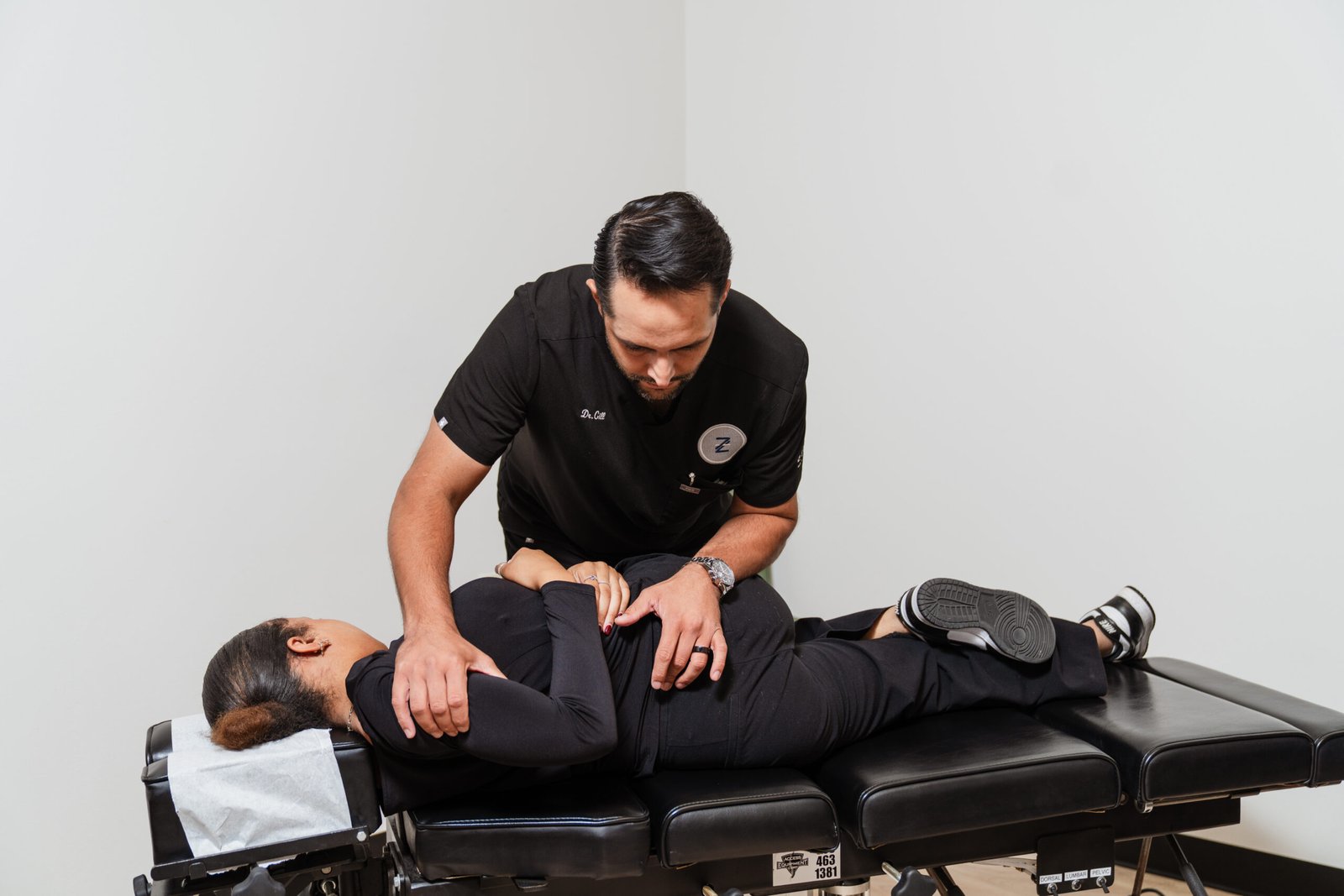

Pain does not always stay where the problem begins.
A sensitive area in the neck can contribute to discomfort near the head. Tension around the shoulder may be felt farther down the arm. A tender muscle in the lower back or hip can sometimes produce pain beyond the exact spot being pressed. One possible reason is referred pain from a myofascial trigger point.
Trigger point therapy focuses on these sensitive areas of muscle tissue to reduce tenderness and improve comfort when muscle-related pain is part of the problem.
When the Pain You Feel Is Not Where the Tension Starts
Trigger points are localized areas of increased sensitivity within a muscle. Pressing on one may reproduce pain directly under the clinician’s hand or create a familiar sensation somewhere else. That second response is referred pain.
This can happen because sensory signals from different tissues share overlapping pathways through the nervous system. As a result, the brain may interpret discomfort as coming from a nearby or more distant area.
Neck and upper shoulder muscles may contribute to pain around the head. Muscles near the shoulder blade may reproduce symptoms around the shoulder or upper arm. Tender areas through the gluteal muscles may be felt farther into the buttock or thigh.
These patterns can be useful clinically, but they are not definitive on their own. Similar symptoms can also come from joints, nerves, or other conditions.
For a closer look at how muscle sensitivity differs from other sources of discomfort, read Muscle Tightness vs. Joint Restriction in Hurst.
How Trigger Point Therapy Changes the Response
Trigger point therapy uses controlled manual pressure and other soft tissue techniques over sensitive muscle tissue. During treatment, pressure may briefly reproduce the patient’s familiar discomfort. The intensity is adjusted based on tolerance.
As sensitivity decreases, the area may feel less guarded and certain movements may become easier.
For someone with pain around the shoulder blade, reaching or turning may feel more comfortable. For a patient with persistent neck tension, reducing tenderness through the surrounding muscles may improve how the area moves.
The response varies from person to person, and trigger point therapy is most useful when the examination suggests that muscle tenderness is contributing to the symptoms.
When Trigger Point Therapy Is Only Part of the Plan
Trigger points can develop alongside repetitive use, sustained positioning, physical strain, or injury. If the same demand continues, the area may become irritated again.
For that reason, ZENITH Injury Relief & Wellness Clinic in Hurst may pair trigger point therapy with mobility work, therapeutic stretching, physical rehabilitation, or chiropractic adjustments when other restrictions are involved.
The combination depends on what continues to provoke the symptoms and what the area needs to tolerate everyday activity more comfortably.
Pain that travels is not always muscle-related. Persistent headaches, progressive numbness, significant weakness, or symptoms that do not respond as expected may require additional medical evaluation.
If you are dealing with recurring muscle tenderness or pain that seems to spread beyond the area that feels tight, schedule a trigger point therapy evaluation with ZENITH. We can determine whether sensitive muscle tissue is contributing to your symptoms and build care around restoring more comfortable movement and function.