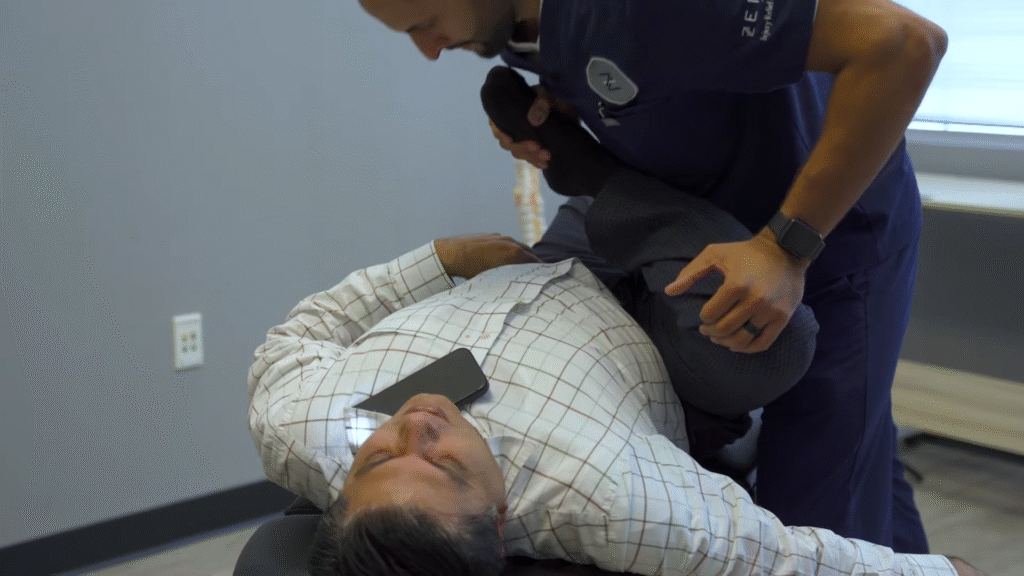
Chiropractic Safety Guidelines: Understanding Risks, Side Effects, and When Chiropractic Care Is Appropriate
Not every condition should be treated with chiropractic care. Here at ZENITH, we prioritize your safety by knowing when not to see a chiropractor and guiding you to the right care.
Is Chiropractic Care Safe?
Chiropractic care is widely used to support spinal health, mobility, and pain relief. When delivered appropriately, it is considered safe for many patients. However, chiropractic care is not suitable for everyone.
Here at ZENITH Injury Relief & Wellness, our chiropractic safety guidelines are designed to help patients understand:
The risks of chiropractic treatment
Possible side effects of chiropractic care
Conditions chiropractors should treat
Conditions chiropractors should not treat
When not to see a chiropractor
Our goal is to help you make an informed, confident decision about your care.
RISKS & SIDE EFFECTS
What Are the Risks of Chiropractic Treatment?
Most patients experience little to no adverse effects from chiropractic care. When side effects do occur, they are usually mild and temporary.
Possible side effects of chiropractic care include:
Muscle soreness or stiffness
Mild headaches
Temporary fatigue
These effects typically resolve within one to two days.

Are Serious Risks Possible?
Although rare, serious complications may occur if chiropractic care is performed without proper screening. This is why chiropractic safety screening and risk assessment are essential before treatment.
Chiropractic Safety Screening at ZENITH
At ZENITH, chiropractic care begins with a comprehensive evaluation, not an adjustment.
Our safety process includes:
Review of medical history and medications
Orthopedic and neurological examinations
Identification of chiropractic contraindications
Referral for imaging or medical evaluation when necessary
If chiropractic care is not appropriate, treatment is postponed or avoided entirely.
CONDITIONS CHIROPRACTORS SHOULD NOT TREAT
When Not to See a Chiropractor
According to established chiropractic safety guidelines, chiropractic care should be avoided or delayed for patients with:
Spinal fractures or instability
Advanced osteoporosis
Bone cancer or spinal tumors
Spinal infections or inflammatory disease
Severe neurological symptoms
Stroke-related conditions
These are clear examples of conditions chiropractors should not treat without medical oversight.
CONDITIONS CHIROPRACTORS SHOULD TREAT
When Chiropractic Care Is Appropriate
When no contraindications are present, chiropractic care may be appropriate for:
Back and neck pain
Joint dysfunction and reduced mobility
Muscle tension and postural strain
Certain nerve-related conditions
These represent conditions chiropractors should treat as part of safe, conservative care.
Patient Safety Comes First at ZENITH
Here at ZENITH Injury Relief & Wellness:
Our safety process includes:
- We follow evidence-based safety guidelines
- We do not treat conditions outside chiropractic scope
- We refer to medical providers when necessary
- We prioritize long-term health over short-term treatment
Chiropractic care is recommended only when it is safe, appropriate, and supported by clinical findings.