
Pain and stiffness do not always come from one structure. A joint may be restricted while the muscles and connective tissues around it remain tense, tender, or difficult to move through comfortably.
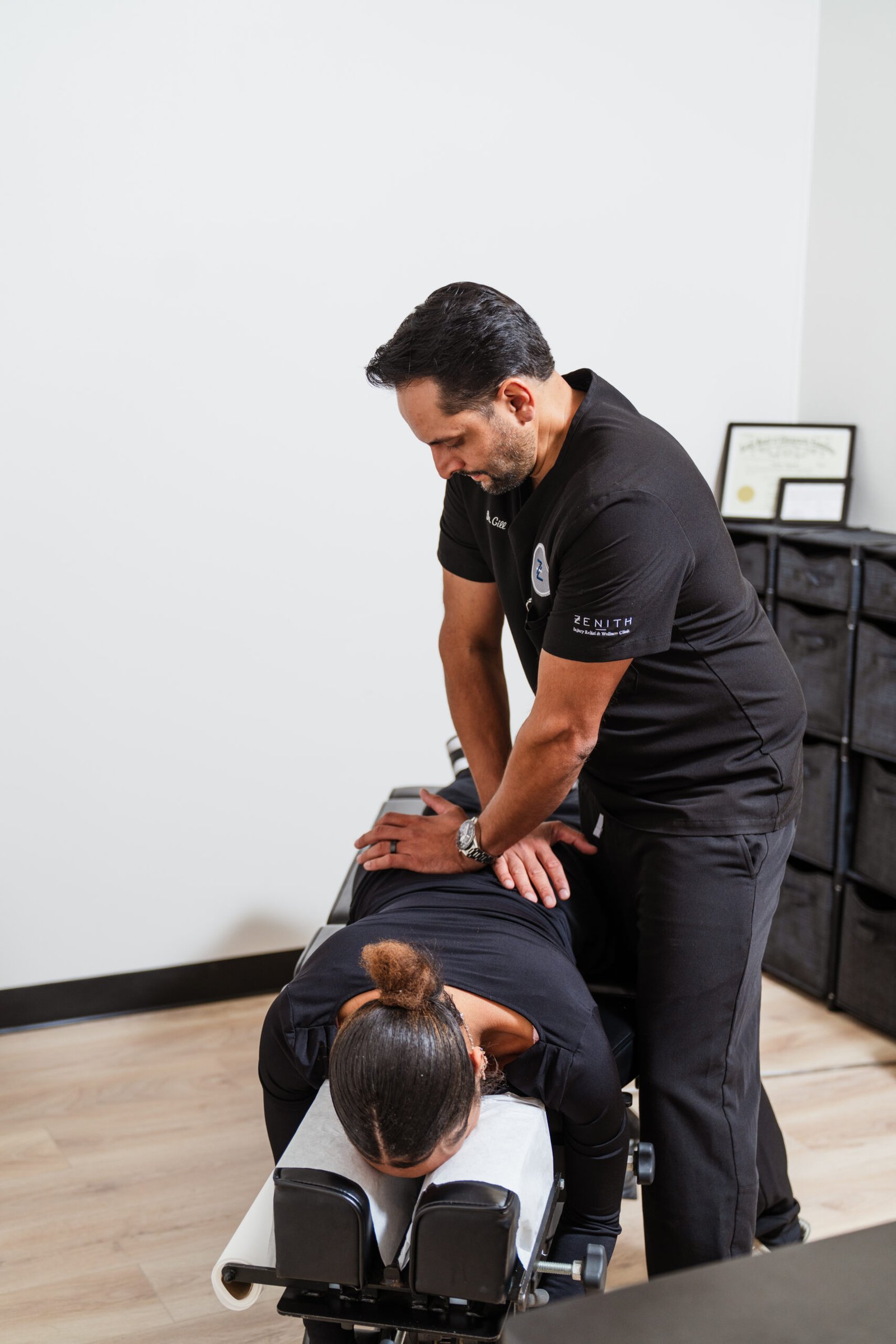
In those cases, chiropractic care and soft tissue treatment can serve different purposes within the same recovery plan. Adjustments can improve joint motion, while soft tissue techniques address muscular and connective tissue restrictions that may still be limiting how comfortably that motion can be used.
The combination is most useful when both are contributing to the same problem.
When Joint Motion Improves but the Area Still Feels Tight
A joint can begin moving better while the surrounding muscles still feel restricted. This can happen after injury, repetitive strain, prolonged postures, or a period of reduced activity.
Neck stiffness is a common example. Improving cervical joint motion may make turning easier, but tension through the shoulders and surrounding soft tissues can still limit the movement.
Soft tissue treatment can help reduce that remaining restriction. When both the joint and surrounding tissues move more freely, the patient often has a better starting point for normal activity and rehabilitation.
When an Injury Involves Several Structures at Once
Car accidents, falls, sports injuries, and work-related strains can affect joints, muscles, ligaments, and connective tissues at the same time.
That can make simple movements such as turning, bending, reaching, or walking feel limited for more than one reason. Chiropractic care may address restricted joint motion, while soft tissue treatment helps with areas that remain tense or sensitive.
As movement becomes easier, rehabilitation can build on that progress with strength, stability, and gradually increasing physical demand.
Using Hands-On Care to Support Active Rehabilitation
Manual treatment is often most useful when it helps the patient participate more comfortably in active recovery.
If soft tissue restriction or joint stiffness is making rehabilitation difficult, improving mobility first can make strengthening and movement work more productive. The sequence depends on what is limiting function at that stage.
As recovery progresses, the emphasis should shift. Strength, control, endurance, and the ability to tolerate normal physical demands become more important than continuing hands-on treatment indefinitely.
At ZENITH, chiropractic care, soft tissue treatment, and rehabilitation can be adjusted as those needs change.
When Combining Both Treatments Makes Sense
Not every patient needs both approaches. Persistent tightness does not automatically mean more soft tissue work is needed, and stiffness does not automatically mean chiropractic care should be the only focus.
An evaluation can help determine whether the main limitation is coming from joint motion, soft tissue restriction, or both. It can also show when rehabilitation should take a larger role in the plan.
If pain, stiffness, or limited mobility continues to interfere with how you move, schedule an evaluation with ZENITH. Our team can assess the factors affecting movement and determine whether chiropractic care, soft tissue treatment, rehabilitation, or a combination of approaches fits your recovery.