
After an accident, most people expect pain to be the first and most obvious signal that something is wrong. In reality, that is not always what shows up first.
For many patients, the first thing they notice is that movement feels off. Turning the head does not feel as smooth. Sitting or standing feels slightly uneven. The body feels tight in a way that is hard to fully explain, like something is just not moving the way it normally would. Pain often comes later.
That early shift in movement is easy to overlook, especially when it is not severe. But it is often one of the clearest signs that the body has not fully recovered from the impact, even if everything still feels manageable.
How Movement Changes and Why It Starts to Matter
During a collision, the body reacts quickly. Muscles tighten, joints absorb force, and the spine is often pushed beyond its normal range, even in lower-speed accidents. This does not always create immediate pain, but it can change how joints move together afterward.
When joint motion becomes restricted, the body begins to adapt. Muscles start guarding certain areas, while other regions take on more load to keep things moving. These changes are subtle at first. You can still go through your day, but movement feels a little less natural, sometimes a little heavier than usual.
Over time, that is usually when pain begins to show up. The neck may become stiff, the lower back may start tightening up, and headaches or shoulder tension can develop without a clear reason. By then, the body has often been compensating for a few days already, sometimes longer, and those patterns begin to settle in.
What matters most is not always how intense the pain feels, but whether the body is returning to normal movement.
Signs that something is not resolving on its own can include difficulty turning the head fully, stiffness that does not improve with rest, discomfort when sitting or standing for longer periods, or just a general sense that posture feels harder to maintain than it should. Pain that increases over several days instead of improving is another pattern that tends to show up.
These are usually signs that joint mobility has been affected and the nervous system is still in a protective state. When that continues, the body relies on compensation longer than it should, which can slow recovery and make symptoms linger or return later.
Restoring Movement and Supporting Recovery
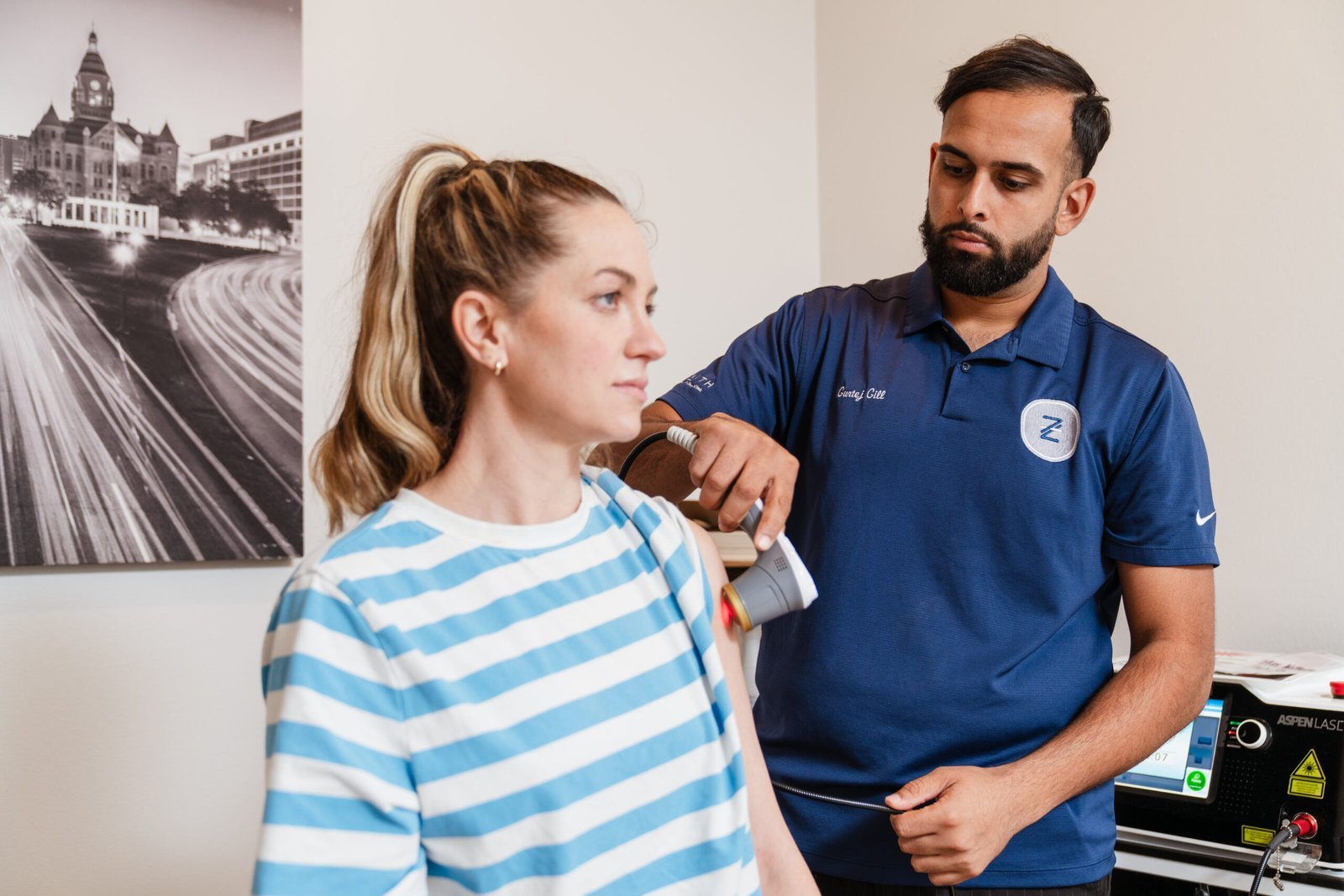
At ZENITH Injury Relief & Wellness Clinic, post-accident care focuses on restoring how the body moves, not just reducing pain. Evaluation looks at joint mobility, posture, and how different regions of the body are working together, because that is usually where the issue actually shows up.
Chiropractic adjustments are used to restore motion to restricted joints. As movement improves, muscles begin to relax and the body can shift out of those protective patterns. Things start to feel more natural again, not all at once, but gradually.
Care is adjusted over time based on how the body responds. The goal is to help the body return to normal movement patterns so recovery can continue without unnecessary strain or setbacks.
If you have been in an accident and notice that movement feels restricted, uneven, or just different than usual, schedule a chiropractic evaluation with ZENITH today to assess how your body is moving and begin care focused on restoring normal function.